Types of handbags are easiest to identify by their shape, opening and construction. This visual guide compares 32 familiar styles with real examples.
A baguette sits close under the arm. A barrel has round ends. A trunk opens like a tiny piece of luggage. Once you know which details to look for, handbag names become much easier to understand.
This guide brings together 32 handbag styles with product and styling photographs. Some names describe a shape, others a closure or texture. A few, such as the Celine Belt Bag and Chloé Drew, refer to specific branded designs. They are included as examples, not as interchangeable names for all bags with similar features.
That means the categories overlap. One bag can be crescent-shaped, woven and carried on the shoulder. The aim is to give you more precise words for what you see, whether you are comparing bags or planning an original collection.
Handbag Types at a Glance
| Handbag type | Defining feature | Common use |
|---|---|---|
| Baguette Bag | Long, narrow body with a short shoulder strap | Compact everyday and evening carry |
| Barrel Bag | Horizontal cylinder with round ends | Everyday essentials |
| Basket Bag | Basket-like body and woven natural texture | Warm-weather outings and casual carry |
| Boston Bag | Rounded rectangular body with two top handles | Everyday carry and small travel essentials |
| Bowler Bag | Bowling-inspired zip-top silhouette | Underarm and everyday carry |
| Box Bag | Defined edges and a structured, box-like body | Organized daily essentials |
| Bucket Bag | Deep upright body with a rounded base | Casual everyday carry |
| Celine Belt Bag | Structured body with extended side panels and tied front detail | Polished everyday carry |
| Circle Bag | Circular front and back panels | Small everyday essentials |
| Cloud Bag | Soft rounded body with a gathered opening | Light daily carry and evenings |
| Crescent Bag | Curved half-moon outline | Compact daily and occasion carry |
| Croissant Bag | Curved, rounded body with segmented shaping | Soft everyday carry |
| Diamond-Quilted Bag | Padded surface stitched in a diamond pattern | Depends on the underlying bag shape |
| Doctor’s Bag | Structured body with a wide framed opening | Work and organized carry |
| Drawstring Bag | Opening gathered by cords or ties | Flexible everyday carry |
| Drew Bag | Rounded lower body, flap and distinctive metal closure | Compact everyday and evening carry |
| Envelope Bag | Pointed flap resembling an envelope | Light everyday and evening carry |
| Flap Bag | Panel folding over the main opening | Everyday carry |
| Frame Bag | Rigid frame supporting the opening | Everyday and occasion carry |
| Fringe Bag | Rows of hanging strips that move with the bag | Casual styling |
| Geometric Panel Bag | Repeated angular panels across a flexible body | Everyday carry with a sculptural surface |
| Hobo Bag | Soft body that drapes beneath a shoulder strap | Relaxed daily carry |
| Jelly Bag | Glossy, sometimes translucent plastic-like material | Small casual essentials |
| Phone Bag | Compact body proportioned around a phone | Hands-free carry of a few essentials |
| Ruched Handbag | Gathered material creating repeated soft folds | Textured everyday carry |
| Saddle Bag | Equestrian-inspired curved silhouette | Compact everyday and occasion carry |
| Satchel Bag | Structured body with a broad flap and strap fastenings | Organized everyday carry |
| Shell Bag | Fan-like shape with sculpted, scalloped sections | Statement everyday or occasion carry |
| Trapeze Bag | Central body with broad projecting side wings | Structured everyday carry |
| Trunk Bag | Rigid case construction with luggage-inspired details | A small selection of occasion essentials |
| Vanity Case Bag | Box-like body with a lid-style opening | Compact everyday and occasion carry |
| Woven Bag | Interlaced strips forming the visible surface | Everyday carry across different silhouettes |
1. Baguette Bag
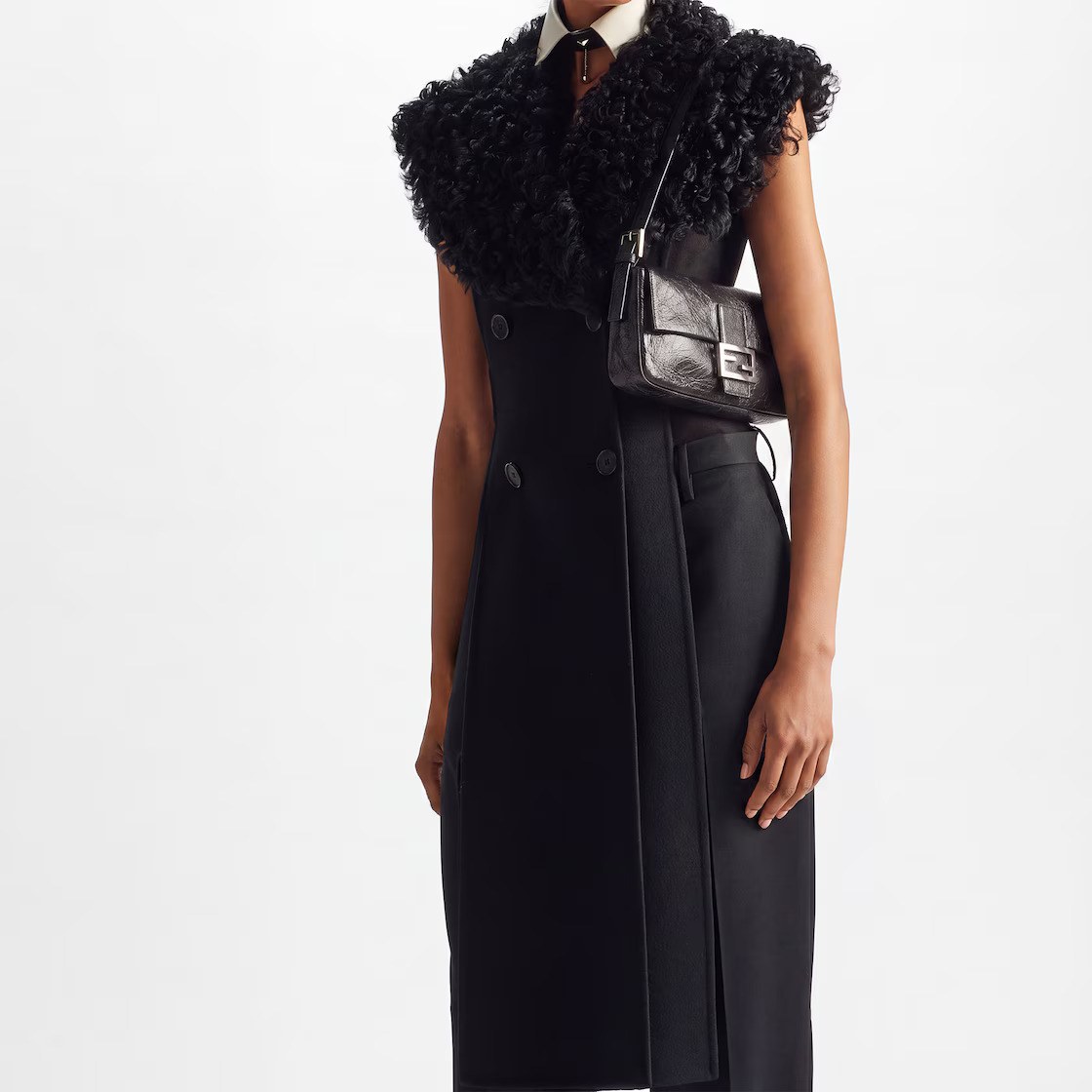
A baguette bag is wider than it is tall, with a short strap that lets it tuck close beneath the arm. The slim profile is the point: it holds a small selection of essentials without becoming a full-size shoulder bag. Fendi’s Baguette is the reference shown here.
Check the opening as well as the outside measurements. A long bag can still have limited usable space when the flap, lining and side panels take up room. A detachable longer strap changes how it can be worn, but not its baguette shape.

2. Barrel Bag
Look at the ends of a barrel bag: they are round, giving the body a cylindrical shape rather than a rectangular base with a curved top. The Louis Vuitton Papillon makes that distinction easy to see. Its length provides storage while the circular profile keeps the bag compact.
A top zipper usually follows the long axis. Opening width matters on this style, especially if the body is firm. It may look roomy from the side yet be awkward to reach into through a narrow zipper.


3. Basket Bag
Basket bags borrow their shape and texture from traditional baskets. Some are rigid; others flex at the sides. The Loewe example combines an open woven body with leather handles and a front patch. It is a useful contrast to a woven leather bag, which can have an entirely different structure.
For everyday use, consider an inner pouch or lining to keep small items contained. Handle attachment and the feel of the woven edges matter more than a photograph can show.


4. Boston Bag
A Boston bag combines a rounded rectangular body, a top zipper and two handles. It has the look of a small travel bag, although many handbag versions are sized for daily essentials rather than an overnight stay. The MCM Ella shown here has this compact, zip-top construction.
Boston and bowling bags overlap in retail naming. For a design brief, specify the base, end-panel shape and opening instead of relying on the name alone. A firmer base helps the bag sit upright when set down.


5. Bowler Bag
Bowler, or bowling, bags take their name from bags used to carry bowling equipment. Fashion versions vary considerably: some have a high domed top and short handles, while others stretch the silhouette into a low, elongated shape. The Row’s Astra illustrates the softer, understated end of that range.
This is not a completely separate construction from every Boston bag. Compare the actual proportions and handle drop. Here, the longer handles make shoulder carrying part of the design rather than an optional extra.


6. Box Bag
A box bag has a defined, structured outline that keeps its shape when empty. It does not need to be a perfect cube. Celine’s Classic Box is a rectangular flap design with restrained hardware, showing how the term can describe a clean, architectural handbag rather than a literal box.
Unlike a trunk bag, it need not have reinforced corners, luggage-style fittings or a rigid case construction. Check the interior depth: a neat exterior often means less room for bulky items such as a glasses case.


7. Bucket Bag
The bucket bag is defined mainly by its deep, upright body and rounded or oval base. A drawstring is common, but it is not essential: some versions use an open top, a snap or another closure. The Tory Burch example combines a recognizable bucket shape with a gathered opening.
Its depth can be convenient, but small items tend to settle at the bottom. An interior pocket or removable pouch makes the capacity easier to use without changing the outer silhouette.


8. Celine Belt Bag
Celine’s Belt Bag is a named design, not the general category of bags worn around the waist. Its distinguishing features are the structured body, projecting side panels and a belt-like detail that runs across the front and extends at either side.
Keep the brand name in the heading to avoid confusing it with a waist bag. If describing an original design with similar broad proportions, use construction terms such as a structured top-handle bag with side gussets, rather than treating Celine’s model name as a generic category.


9. Circle Bag
Circle bags, also called round bags, are identified by their circular face. They can be soft or structured, and may use a top handle, a long strap or both. The supplied Louis Vuitton examples show different finishes and ways of carrying this outline; they are not presented as an identical pair.
A round shape uses space differently from a rectangle. Before choosing a size, check whether a phone fits through the opening and sits comfortably inside. The widest external measurement does not tell the whole story.


10. Cloud Bag
Cloud bag is a descriptive name for a soft, rounded bag with a gathered, pillowy appearance. The Mansur Gavriel Mini Cloud Clutch shown here has a compact body that can be held in the hand. The product and styling photographs show different colors.
The folds should look relaxed rather than sharply pleated. Material softness and the construction beneath the opening create that effect. A cloud bag can also be a frame bag or a clutch, so these names describe different aspects of the same design.


11. Crescent Bag
A crescent bag follows a curved, half-moon outline. The upper edge dips inward while the lower edge sweeps outward. It can be structured or soft; the defining feature is the curve, not a particular closure or strap. Bottega Veneta’s Mini Jodie adds woven texture and a knotted handle to that silhouette.
Crescent and hobo bags can overlap. Crescent describes the outline, whereas hobo usually suggests a softer shoulder bag with visible drape. The small, hand-carried example here shows why those terms are not interchangeable.


12. Croissant Bag
A croissant bag takes the crescent outline a step further with rounded volume and shaping that recalls a folded pastry. Lemaire’s example uses curved seams to give the body its distinctive form. It reads as a three-dimensional shape rather than a flat half-moon panel.
The difference is easiest to see from the side. A crescent may have a relatively thin body; a croissant design emphasizes fullness and folds. Capacity and drape change with size, so a small and a large version can wear quite differently.


13. Diamond-Quilted Bag
Diamond quilting describes a surface treatment, not the outline of a bag. Crossing diagonal stitch lines create a repeated diamond pattern, often over padding. The Chanel examples show how that texture sits on a flap-bag construction.
Do not confuse a diamond-quilted bag with a diamond-shaped bag or a geometric panel bag. Quilting is stitched into a flexible surface; geometric panels are separate visual or structural units. A bag can be both diamond-quilted and a flap bag, vanity case or tote.


14. Doctor’s Bag
A doctor’s bag is recognized by its substantial body and an opening designed to spread wide. The framed mouth makes it easier to see and reach the contents than a narrow slot would. The Time Resistance example pairs that construction with short handles and a firm base.
Modern versions range from compact handbags to larger work bags. Look beyond the traditional appearance: the opening mechanism, empty weight and room for documents determine whether a particular version suits daily use.


15. Drawstring Bag
Drawstring describes how a bag closes. Pulling cords or ties gathers the opening, changing both its width and the folds around it. Loewe’s Flamenco is a useful example because it has this gathered closure without the upright cylindrical shape usually associated with a bucket bag.
That distinction helps when comparing handbag styles: bucket is a body shape; drawstring is a closure. The two photographs show different colors. Neither the color nor the carrying strap is what makes these bags drawstring designs.


16. Drew Bag
Drew is a Chloé model name rather than a universal handbag category. Its rounded lower body, broad flap and prominent metal closure give it a recognizable appearance. The fine chain strap contrasts with the fuller shape of the bag itself.
For a style guide, it is useful to include recognizable designs as long as the distinction is clear. For an original product description, describe the curved flap silhouette and closure instead of using Drew as a generic name for every rounded crossbody bag.


17. Envelope Bag
The envelope bag gets its name from the flap, which folds down into a point or angular envelope-like shape. Most examples have a fairly flat body, although some include gussets for extra depth. The Saint Laurent chain pouch shows the characteristic lines clearly.
An envelope bag is also a type of flap bag. The narrower name is useful when you want to describe the front design precisely. Check whether the pointed flap is decorative or provides the main fastening, and how easily the closure aligns when the bag is filled.


18. Flap Bag
A flap bag closes with a panel that folds over the opening. The flap may be square, rounded or pointed, and can hide a snap, clasp or another fastening. The Row’s Nan example has a broad, understated flap and a rectangular body.
Flap and fold-over do not mean exactly the same thing. A fold-over bag typically bends the upper part of its own body down; a flap bag has a covering panel. The category is broad, but this detail helps distinguish it from other closures in a style brief.


19. Frame Bag
A frame bag has a rigid structure around the opening, supporting the mouth while the body below may remain soft. A kiss-lock is one familiar fastening, but not every frame bag uses one. Coach’s example combines a metal kiss-lock frame with a softer black body.
The frame controls how far the bag opens and how the upper edge sits. When assessing a design, check access to the corners and the comfort of the fastening. A beautiful clasp is less useful if it is awkward to open one-handed.


20. Fringe Bag
Fringe bags use hanging strips to add movement and texture. Fringe can run along a flap, follow the bottom edge or cover much of the body. The Freda Salvador example places long fringe below a curved bag, allowing the underlying silhouette to stay visible.
Fringe is different from a single tassel. It forms a row or broader section of individual strips. Length matters in practice: very long fringe can catch on clothing or rest on surfaces when the bag is set down.


21. Geometric Panel Bag
A geometric panel bag uses repeated angular shapes to create its surface. In the Bao Bao Issey Miyake example, triangular panels change their relationship as the bag bends and fills. The result is a faceted appearance rather than the softness of stitched quilting.
This name describes the panel treatment, not a single carrying style. The example is a tote, but geometric panels can appear on smaller bags too. It should not be labeled a diamond-quilted bag simply because diagonal lines are visible.


22. Hobo Bag
A hobo bag is a soft shoulder bag whose body settles and drapes when carried. Many have a curved top, though not all form a precise crescent. Coach’s Brooklyn example has a simple silhouette that lets the material and the weight of the contents shape the bag.
The strap drop and the softness of the body are worth checking together. A bag that looks relaxed on a shelf can feel tight under the arm when worn over a coat. Interior organization also matters in an otherwise open, flexible shape.


23. Jelly Bag
Jelly bag refers to the material and finish rather than one shape. These bags have a glossy, often translucent appearance associated with flexible plastic or rubber-like materials; the exact composition depends on the product. The pink Furla Candy shown here uses a structured top-handle silhouette.
A wipeable exterior does not automatically make the whole bag waterproof. Zippers, seams and hardware can still admit water. Transparency is another practical detail: consider whether the contents will be visible and whether an inner pouch would be useful.


24. Phone Bag
A phone bag is built around a smaller load: a phone and, depending on the design, a few cards or keys. Prada’s example uses a slim vertical body and a long strap. The useful measurement is the internal space, especially when the phone has a protective case.
Check the opening and fastening as well as the height. A phone may fit inside but still be difficult to remove quickly. This is a function-based category, so phone bags can also have flaps, zippers or drawstring closures.


25. Ruched Handbag
Ruching gathers material into folds, creating texture across the surface of a bag. The Prada Gaufre example uses repeated gathered sections on a top-handle body. The texture is part of the construction, not simply a wrinkle caused by use.
Ruched and ruffled are different descriptions. Ruching draws material together within a panel; ruffles usually form a loose, frilled edge or added strip. A ruched bag can still be a tote, satchel or another shape underneath that surface treatment.


26. Saddle Bag
Generic saddle bags often have a rounded lower edge and a flap, drawing on equestrian bags. Dior’s Saddle is a distinctive branded interpretation with an asymmetric outline. It is useful as an example, but its exact shape should not be treated as the definition of every saddle bag.
Curved and asymmetric bodies can reduce usable space near the corners. Check the shape of the interior and the access under the flap, especially when choosing a small version for a larger phone.


27. Satchel Bag
A traditional satchel has a structured body, broad flap and strap-style fastenings. The red Cambridge Satchel example shows the schoolbag-inspired form in a compact size. A shoulder strap is common, while a top handle depends on the version.
The name is also used more loosely in handbag retail, so photographs and measurements remain important. A full-width flap can protect the opening well, but check whether the front buckles work directly or conceal faster magnetic or push-lock closures.


28. Shell Bag
Shell bag is a descriptive name, and it is used for more than one silhouette. In these CHYLAK examples, the shell reference comes from the fan-like spread, scalloped upper edge and vertical sculpting. This is not simply another name for a small evening clutch.
The photographs show two sizes and different embossed finishes. The oversized brown-python example is described by the brand as embossed cowhide, not python skin. When planning a similar broad silhouette, specify the profile and panel construction rather than relying on the word shell alone.


Product reference: CHYLAK Oversize Shell Bag.
29. Trapeze Bag
Trapeze and trapezoid describe related shapes, but they are not always identical product names. A generic trapezoid bag widens toward one edge. Celine’s Trapeze adds projecting side wings to a structured central body, giving it a particularly recognizable outline.
The supplied photographs show the front and back of the same two-tone style. Pay attention to how the side panels behave when the bag is filled: they affect both the silhouette and how much space the bag occupies beside the wearer.


30. Trunk Bag
A trunk bag looks like a miniature piece of luggage. Firm walls, defined corners and case-style hardware separate it from many softer box bags. Louis Vuitton’s Petite Malle illustrates that trunk reference through its rectangular case and prominent metal fittings.
The distinction is structural, not just visual. Rigid walls do not stretch to accommodate an extra item, and hardware adds weight. Check internal dimensions carefully. A trunk bag may be wider on the outside than the space actually available inside.


31. Vanity Case Bag
A vanity case bag borrows its form from a cosmetics case. The body is box-like, often with a top handle and a zipper that travels around the upper edge. Handbag versions add a long strap or chain, as in the red Chanel example.
It overlaps with the box-bag family, but the lid-style opening makes the narrower name useful. Check whether the lid opens without spilling the contents and whether the bag can be reached into while hanging from its strap.


32. Woven Bag
Woven bags are defined by interlaced material, not by a single outline. They can be made from leather strips, fibers or other suitable materials. The Bottega Veneta Andiamo example shows a woven surface on a structured top-handle shape rather than a traditional open basket.
This category can overlap with several others in the guide. A woven bag might also be a crescent, tote or bucket. For a clear description, name both the construction and the shape: woven leather top-handle bag says more than woven bag alone.


How to Tell Similar Handbag Styles Apart
Boston, bowler or barrel?
Start with the end panels. A barrel has a cylindrical body with round ends. Boston and bowler bags usually have a flatter base and a rounded top, but brands use those two names inconsistently. Compare the shape, handle drop and opening rather than expecting the label alone to settle the difference.
Crescent, croissant or hobo?
Crescent describes the half-moon outline. Croissant emphasizes rounded volume and pastry-like shaping. Hobo describes a soft shoulder-bag construction that drapes when carried. A single bag can fit more than one of these descriptions.
Box, trunk or vanity case?
Box is the broadest description: a defined, structured body. A trunk adds rigid case construction and luggage references. A vanity case usually has a lid-like top opening borrowed from a cosmetics case.
Are all bucket bags drawstring bags?
No. Bucket describes the upright body and rounded base; drawstring describes the closure. Many bags combine both, but a bucket can use a different fastening, and a drawstring bag can have a broad, soft body.
What is the difference between ruching and quilting?
Ruching gathers material into folds. Quilting uses stitching to create a repeated surface pattern, often with padding underneath. Neither term specifies the shape or size of the bag.
Choosing a Style for an Original Handbag Collection
Begin with what the bag needs to carry. Then choose the silhouette, opening and strap arrangement. A beautiful compact shape still needs to fit the intended phone, wallet and other essentials; a larger bag needs comfortable handles and a usable interior.
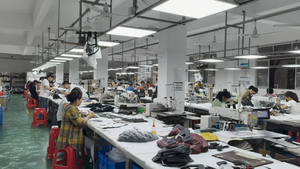
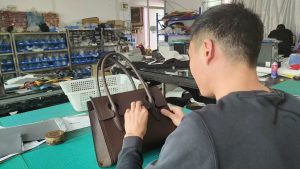
For a manufacturing brief, include overall and internal dimensions, material preferences, lining, pockets, closure and strap drop. Mark which details are essential and which can change during sampling. Use reference photographs to explain proportions and construction, while developing your own design rather than copying another brand’s logos or distinctive details.
Planning your own collection? Share your original sketches and requirements with Mingye Bag to discuss sample development and construction options.
Brand examples are included to illustrate handbag terminology. Brand and product names belong to their respective owners. Their inclusion does not imply endorsement, affiliation, or that Mingye manufactures the pictured products.